HornetAlert is not a medical service and this rating is not medical advice: it is our own editorial judgement of how much caution a species deserves, not a clinical assessment of any sting. If you have been stung and feel unwell, contact a doctor or your local emergency number.
How to recognize it
The largest native European hornet, reddish-brown and yellow colors, reddish head and thorax.
Where it lives
Often nests in tree cavities, attics, or wall gaps, with nests that can reach a few hundred individuals.
Behavior toward humans
Despite its reputation, it is relatively unaggressive unless provoked. It flies after dark and is drawn to lit windows, which is where most unexpected encounters happen.
In the field
- Size
- Workers up to 25 mm; queens can reach 35 mm.Penn State Extension
- Nest
- A paper nest in a sheltered aerial space — typically a hollow in a large standing tree, or another dark cavity.Penn State Extension · Royal Horticultural Society (RHS)
- Colony
- 1,500–3,000 cells, with 200–400 workers at the mid-September peak.Penn State Extension
- When
- Colonies run until the first hard frost. Unusually among wasps it flies at night, which is why it turns up at lit windows after dark.Penn State Extension
- What it eats
- Hunts grasshoppers, flies and yellowjackets, then shifts towards sugars in autumn — fallen fruit and sap from shrubs.Penn State Extension
Each line below is taken from the source named beside it. Where a species has no entry for something, nothing is shown rather than a guess.
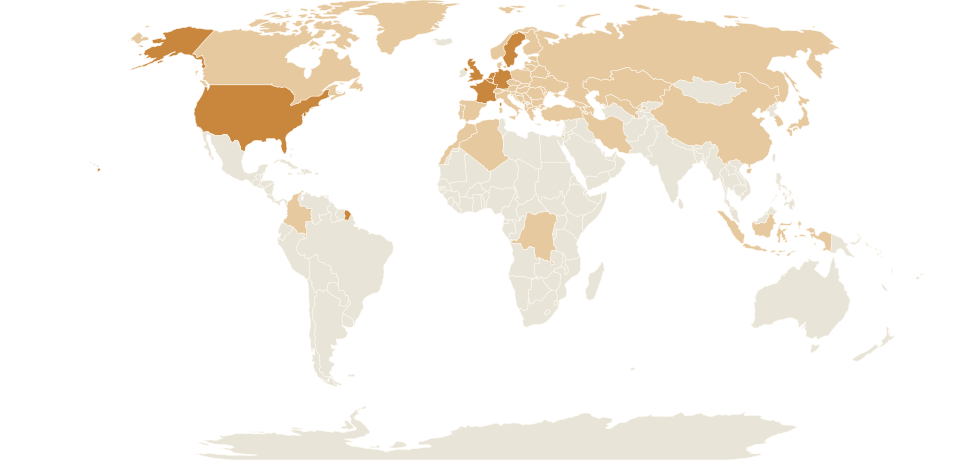
Where in the world
Documented status by region
- NativeEurope
- NativeAsia
- IntroducedNorth America1840
Lines run from the native region to regions where the species has since been recorded.
These are indicative regions, not range maps. Each block covers the whole named region, not the exact area where the species occurs — HornetAlert holds region-level status records, not distribution polygons.
Known range