HornetAlert is not a medical service and this rating is not medical advice: it is our own editorial judgement of how much caution a species deserves, not a clinical assessment of any sting. If you have been stung and feel unwell, contact a doctor or your local emergency number.
How to recognize it
Large, metallic black-blue bee, sturdy body and dark iridescent wings. Flight is loud and low.
Where it lives
A solitary species: digs tunnels in dry or dead wood (beams, posts) to lay eggs, without forming colonies.
Behavior toward humans
Despite its size, it is a calm insect and rarely stings; males, often the most visible, don’t even have a stinger.
In the field
- Size
- Up to 25 mm — one of the largest solitary bees in Europe, and often taken for a bumblebee or even a beetle.Heredity (Nature portfolio, peer-reviewed)
- Nest
- Solitary. The female excavates tunnels and brood chambers in dead or living wood with her mandibles.Heredity (Nature portfolio, peer-reviewed)
Each line below is taken from the source named beside it. Where a species has no entry for something, nothing is shown rather than a guess.
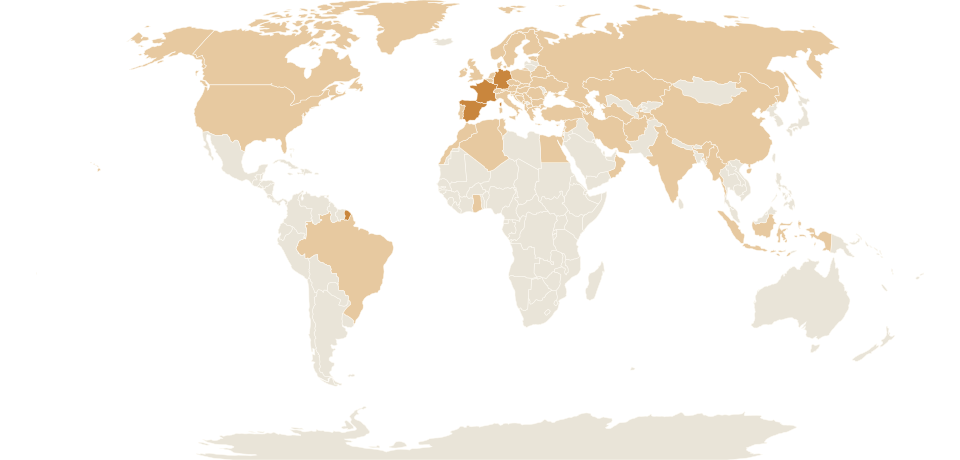
Where in the world
Documented status by region
- NativeEurope
- NativeAsia
Lines run from the native region to regions where the species has since been recorded.
These are indicative regions, not range maps. Each block covers the whole named region, not the exact area where the species occurs — HornetAlert holds region-level status records, not distribution polygons.
Known range