HornetAlert is not a medical service and this rating is not medical advice: it is our own editorial judgement of how much caution a species deserves, not a clinical assessment of any sting. If you have been stung and feel unwell, contact a doctor or your local emergency number.
How to recognize it
Reddish-brown body with a clear yellow band on the abdomen, similar in size to the European hornet.
Where it lives
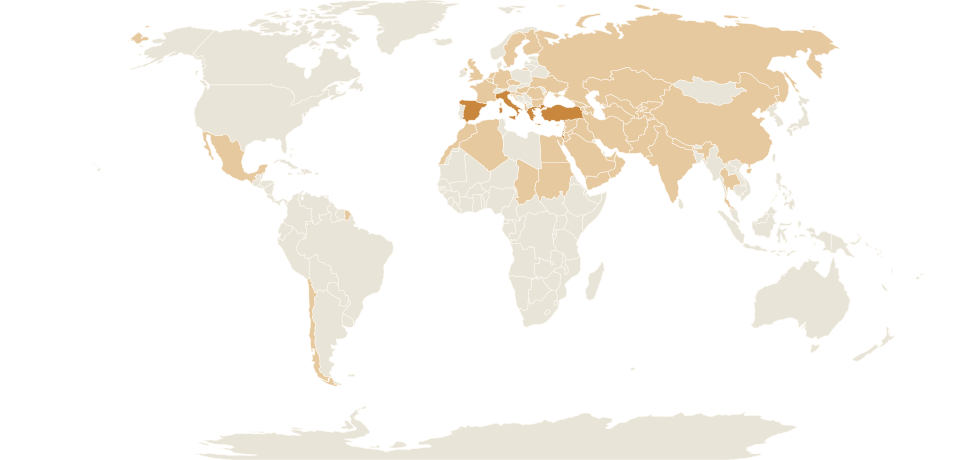
Common in the Middle East and North Africa, also spreading in South America; often nests underground or in wall cavities.
Behavior toward humans
Most active during the hottest hours of the day, and a regular visitor to apiaries.
In the field
- Nest
- Underground, or above ground in cracks in rock and walls and under the roofs of buildings.Frontiers in Insect Science (peer-reviewed)
- When
- Across North Africa and the Middle East the colony cycle runs from mid-to-late April to the end of November, with mating from October into November.Frontiers in Insect Science (peer-reviewed)
- What it eats
- Scavenges as well as hunts, taking beetles, flies, true bugs, other hymenopterans and moths. A recognised pest at apiaries.Frontiers in Insect Science (peer-reviewed)
Each line below is taken from the source named beside it. Where a species has no entry for something, nothing is shown rather than a guess.
Where in the world
Documented status by region
- NativeWestern Asia & the Middle East
- NativeNorth Africa
- NativeSouthern Europe
- IntroducedSouth America2018
Lines run from the native region to regions where the species has since been recorded.
These are indicative regions, not range maps. Each block covers the whole named region, not the exact area where the species occurs — HornetAlert holds region-level status records, not distribution polygons.
Known range