HornetAlert is not a medical service and this rating is not medical advice: it is our own editorial judgement of how much caution a species deserves, not a clinical assessment of any sting. If you have been stung and feel unwell, contact a doctor or your local emergency number.
How to recognize it
Body almost entirely dark brown-black, a single orange band on the abdomen near the tip, legs with yellow tips.
Where it lives
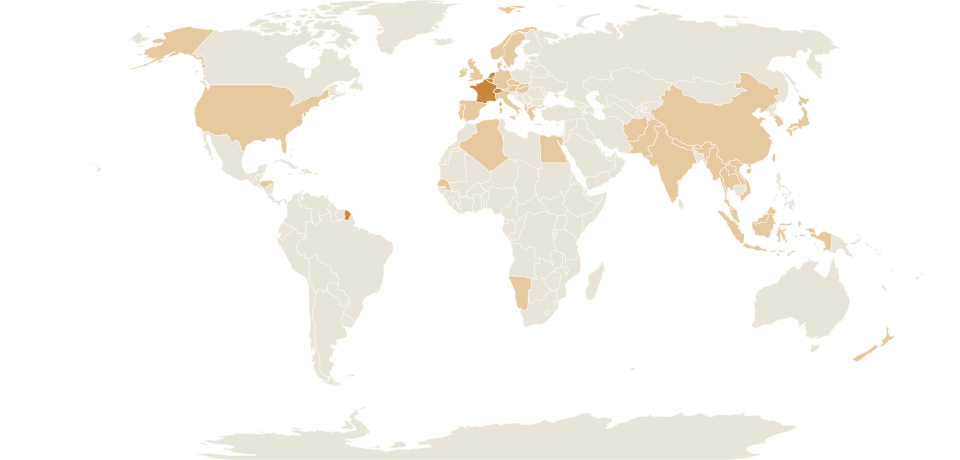
An invasive species in Europe: builds large spherical nests often high up in trees, hard to spot until late in the season.
Behavior toward humans
Very active at preying on honey bees near hives; colonies can grow large and defend the nest decisively if approached.
In the field
- Size
- The season’s first workers are around 15 mm and grow larger through the summer; queens are 20–32 mm.Penn State Extension
- Nest
- Three stages: an embryo nest about the size of a tennis ball, a primary nest, then an egg-shaped secondary nest built high in a tall tree — often larger than a basketball, and usually only visible from late summer.Penn State Extension · USDA Animal and Plant Health Inspection Service
- Colony
- A mature colony averages about 400 workers, with a recorded maximum near 2,000.Penn State Extension
- What it eats
- Hunts bees, wasps and flies, hovering in front of hives and flowers. In urbanised parts of Europe honey bees made up nearly 70% of its prey.Penn State Extension
Each line below is taken from the source named beside it. Where a species has no entry for something, nothing is shown rather than a guess.
Where in the world
Documented status by region
- NativeSoutheast Asia
- InvasiveEurope2004
Lines run from the native region to regions where the species has since been recorded.
These are indicative regions, not range maps. Each block covers the whole named region, not the exact area where the species occurs — HornetAlert holds region-level status records, not distribution polygons.
Known range