HornetAlert is not a medical service and this rating is not medical advice: it is our own editorial judgement of how much caution a species deserves, not a clinical assessment of any sting. If you have been stung and feel unwell, contact a doctor or your local emergency number.
How to recognize it
The largest hornet in the world, a very wide orange head relative to the body, brown-and-yellow banded abdomen.
Where it lives
Typically nests underground or in tree cavities near the ground; not yet firmly established in Europe.
Behavior toward humans
A disturbed colony defends its nest in numbers rather than singly. Keep well clear of a nest and do not try to deal with one yourself.
In the field
- Size
- The largest hornet in the world, 1.5 to 2 inches — roughly 38 to 51 mm.Washington State Dept. of Agriculture
- Nest
- Usually in a pre-existing underground cavity with a narrow opening, such as a rodent burrow. Every nest found in Washington State was inside an alder tree cavity.Washington State Dept. of Agriculture
- What it eats
- Preys on honey bees, and can destroy a hive within hours.Washington State Dept. of Agriculture · USDA National Invasive Species Information Center
Each line below is taken from the source named beside it. Where a species has no entry for something, nothing is shown rather than a guess.
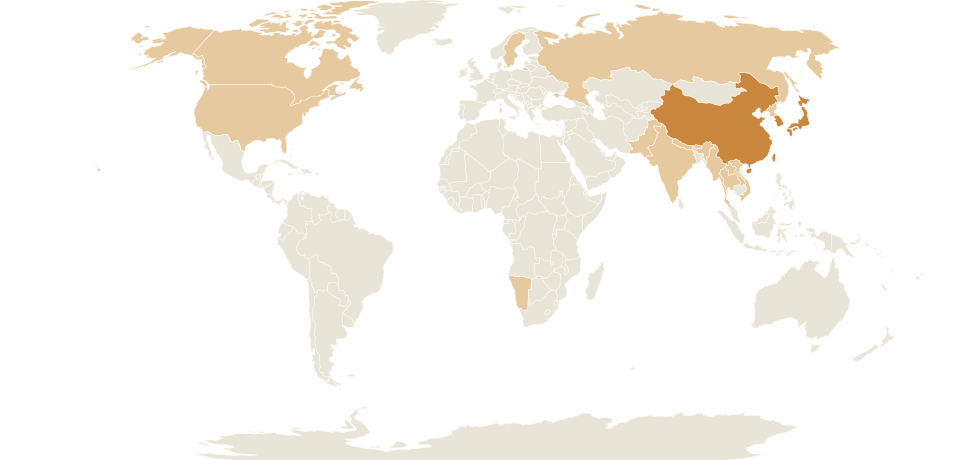
Where in the world
Documented status by region
- NativeEast Asia
- NativeSoutheast Asia
- NativeSouth Asia
- EradicatedNorth America2019
Lines run from the native region to regions where the species has since been recorded.
These are indicative regions, not range maps. Each block covers the whole named region, not the exact area where the species occurs — HornetAlert holds region-level status records, not distribution polygons.
Known range