HornetAlert is not a medical service and this rating is not medical advice: it is our own editorial judgement of how much caution a species deserves, not a clinical assessment of any sting. If you have been stung and feel unwell, contact a doctor or your local emergency number.
How to recognize it
Slender, dark body with thin yellow rings and a very long, thin waist.
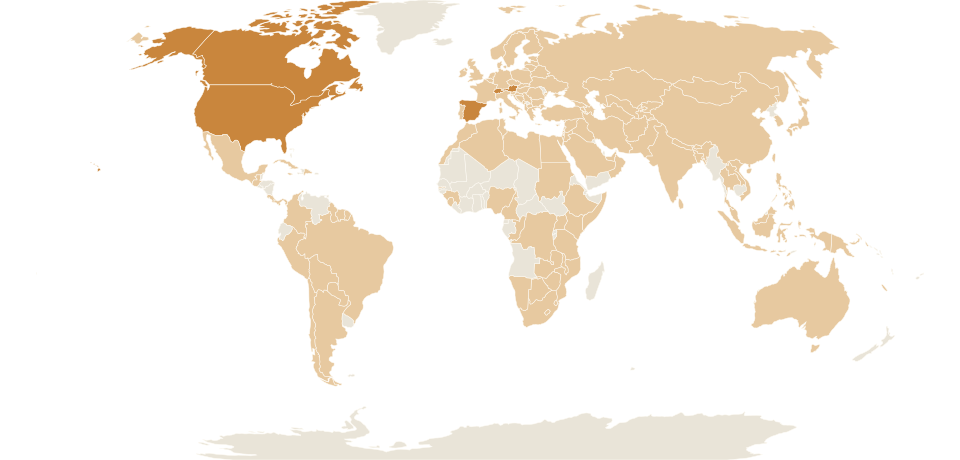
Where it lives
A solitary species: builds small pot-shaped nests out of clay, often on walls, branches, or sheltered surfaces.
Behavior toward humans
Not aggressive and does not defend a shared nest: stings only if grabbed or crushed directly.
In the field
- Nest
- Solitary — no colony at all. The female builds small pots of mud and hangs a single egg from a thread inside each one before she starts stocking it.BWARS (Bees, Wasps & Ants Recording Society)
- Colony
- A female lives two to three months and builds about 25 pots in that time.BWARS (Bees, Wasps & Ants Recording Society)
- What it eats
- Each pot is stocked with between nine and 38 caterpillars, hunted and carried in one at a time. The larva eats through them in about a week.BWARS (Bees, Wasps & Ants Recording Society)
Each line below is taken from the source named beside it. Where a species has no entry for something, nothing is shown rather than a guess.
Where in the world
Documented status by region
- NativeEurope
- NativeAsia
- NativeAfrica
Lines run from the native region to regions where the species has since been recorded.
These are indicative regions, not range maps. Each block covers the whole named region, not the exact area where the species occurs — HornetAlert holds region-level status records, not distribution polygons.
Known range