HornetAlert is not a medical service and this rating is not medical advice: it is our own editorial judgement of how much caution a species deserves, not a clinical assessment of any sting. If you have been stung and feel unwell, contact a doctor or your local emergency number.
How to recognize it
Slender body with a clear waist, sharp yellow and black bands, smooth (not fuzzy) surface.
Where it lives
Nests in ground cavities, wall gaps, or attics, building grayish paper-like nests.
Behavior toward humans
More drawn to human food than bees, especially in late summer. Can sting repeatedly if it feels threatened.
In the field
- Size
- Workers about 15 mm, smaller in late spring; queens 20–25 mm.Royal Horticultural Society (RHS)
- Nest
- Usually underground, or in a dark cavity such as a roof space, reached by an entrance tunnel that can run 45 cm. Nests in roof spaces reach 1.2 m across.Royal Horticultural Society (RHS) · BWARS (Bees, Wasps & Ants Recording Society)
- Colony
- An average mature colony rears about 10,000 workers, 1,000 queens and 1,000 males over a season.BWARS (Bees, Wasps & Ants Recording Society)
- What it eats
- Workers catch insects and spiders, chew them, and feed them to the larvae.BWARS (Bees, Wasps & Ants Recording Society)
Each line below is taken from the source named beside it. Where a species has no entry for something, nothing is shown rather than a guess.
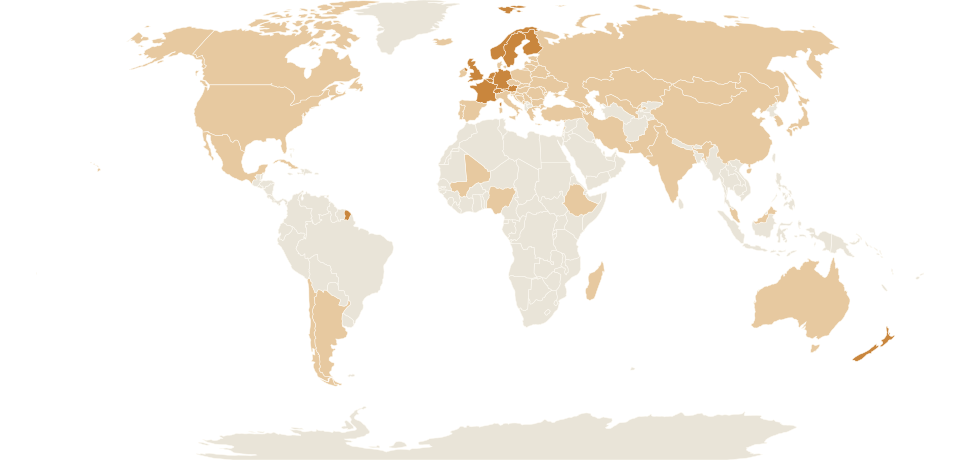
Where in the world
Documented status by region
- NativeEurope
- NativeAsia
- InvasiveOceania
- InvasiveSouth America
Lines run from the native region to regions where the species has since been recorded.
These are indicative regions, not range maps. Each block covers the whole named region, not the exact area where the species occurs — HornetAlert holds region-level status records, not distribution polygons.
Known range