HornetAlert is not a medical service and this rating is not medical advice: it is our own editorial judgement of how much caution a species deserves, not a clinical assessment of any sting. If you have been stung and feel unwell, contact a doctor or your local emergency number.
How to recognize it
Stocky, fuzzy body, golden-brown colors with darker bands on the abdomen. Flies relatively slowly and predictably.
Where it lives
Lives in organized colonies, in managed hives or natural cavities like hollow trunks. Rarely forms a visible nest outdoors.
Behavior toward humans
Stings only if threatened or if the hive is disturbed; after stinging, the bee dies. Away from the hive it is generally harmless.
In the field
- Size
- Workers 10–15 mm, queens 18–20 mm, drones 15–17 mm.Animal Diversity Web (University of Michigan)
- Nest
- Wax comb — sheets of hexagonal cells the workers secrete themselves — built inside a protected cavity such as a hollow tree.Animal Diversity Web (University of Michigan)
- When
- A summer worker lives two to four weeks; one that overwinters can reach eleven months. A queen lives two to three years.Animal Diversity Web (University of Michigan)
Each line below is taken from the source named beside it. Where a species has no entry for something, nothing is shown rather than a guess.
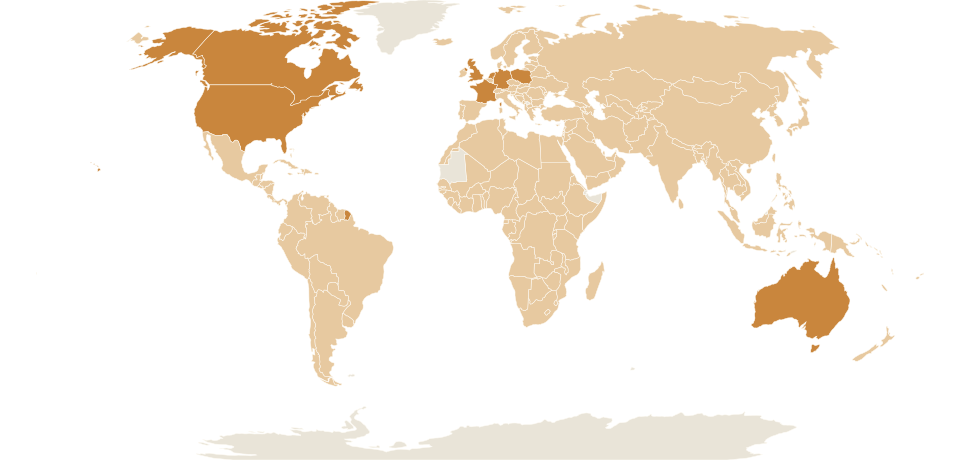
Where in the world
Documented status by region
- NativeEurope
- NativeAfrica
- NativeWestern Asia & the Middle East
- IntroducedNorth America1600
- IntroducedSouth America
- IntroducedOceania
Lines run from the native region to regions where the species has since been recorded.
These are indicative regions, not range maps. Each block covers the whole named region, not the exact area where the species occurs — HornetAlert holds region-level status records, not distribution polygons.
Known range