Nine Arches Bridge
Gotuwala, Ella, Uva Province, Sri Lanka
6.8768, 81.0609
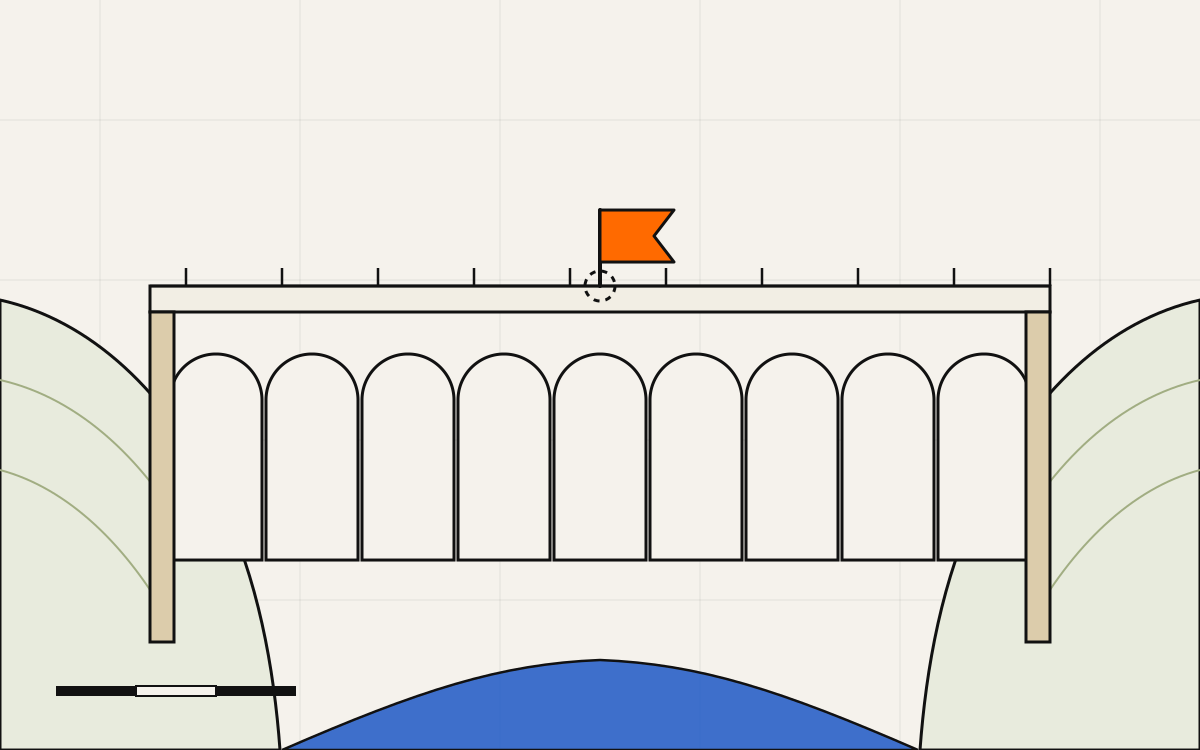
A scenic colonial-era railway viaduct near Ella, ringed by jungle. Giant honey bees nest under the arches, and swarm incidents affecting visitors on the bridge have been reported and filmed in several different years.
Key information
Where it is
Satellite view centred on the exact spot. Switch to “Map” for street labels. Nearby HornetAlert reports appear alongside the hotspot.
What visitors report
Public reports, news coverage and visitor videos describe colonies of giant honey bees beneath the arches occasionally swarming people who are walking or posing on the bridge, in some cases causing many stings and hospital visits. Commonly mentioned triggers are loud noise, sudden movement and drones disturbing the hives. Encounters appear intermittent rather than guaranteed, and the colonies are present through the year rather than in a single season.
Practical advice
- Stay quiet and calm when passing near the colonies; loud noise can provoke a swarm.
- Do not throw objects, fly drones, or make sudden movements near the hives.
- If bees begin to swarm, walk away steadily, cover your head and face, and do not swat.
- Follow any on-site warning signs and instructions from railway or local staff.
- If you have a known allergy to bee stings, carry your medication and take extra care.
Source references
Where hotspot information comes from. We link to sources and paraphrase them rather than copying full review text.
- Colombo GazettenewsNews report on a viral video of giant honey bees (Apis dorsata) swarming tourists on the bridge; a couple hospitalised after roughly 50 and 30 stings; four hives noted under the arches.
- Free Press JournalnewsNews report describing a giant-bee (Apis dorsata) swarm injuring tourists on the bridge and noting the problem has been reported before — establishing recurrence across years.
- Reddit (r/srilanka)socialFirst-person visitor account of being stung by bees at the Nine Arches Bridge.
- Tripadvisorreview-platformVisitor review titled “Beautiful bridge. Beware of the wasps.” warning about the nests under the arches. Title verified via search; full text not retrieved (platform blocks automated access).